Helping Kids Navigate Spring Allergies
Spring is a beautiful time of year—longer days, warmer weather, and blooming trees across Tampa Bay. But for many families, spring also brings something less welcome: seasonal allergies.
If your child suddenly develops sneezing, a runny nose, itchy eyes, or nasal congestion, allergies may be the cause. Seasonal allergies (often called hay fever) are very common in children. In fact, the CDC estimates that about 8.4% of children under age 18 experience seasonal allergies.
The good news is that once you recognize the symptoms, there are several ways to help your child feel more comfortable during allergy season.
What Causes Seasonal Allergies?
Seasonal allergies occur when the immune system reacts to pollen released by trees, grasses, and weeds. These tiny pollen particles travel through the air and can easily enter the nose, eyes, and lungs.
In the spring, tree pollen is the most common trigger. In our area, oak trees are a major contributor—those yellow-green dustings you may notice on cars and outdoor furniture are actually pollen.
For children with allergies, exposure to pollen can lead to symptoms such as:
Sneezing
Runny or stuffy nose
Itchy or watery eyes
Frequent throat clearing
Post-nasal drip
Dark circles under the eyes (“allergic shiners”)
Unlike a cold, allergy symptoms often persist for weeks and occur without fever.
Is It Allergies or a Cold?
Many parents ask this question during the spring. The symptoms can look similar, but a few clues can help distinguish between the two.
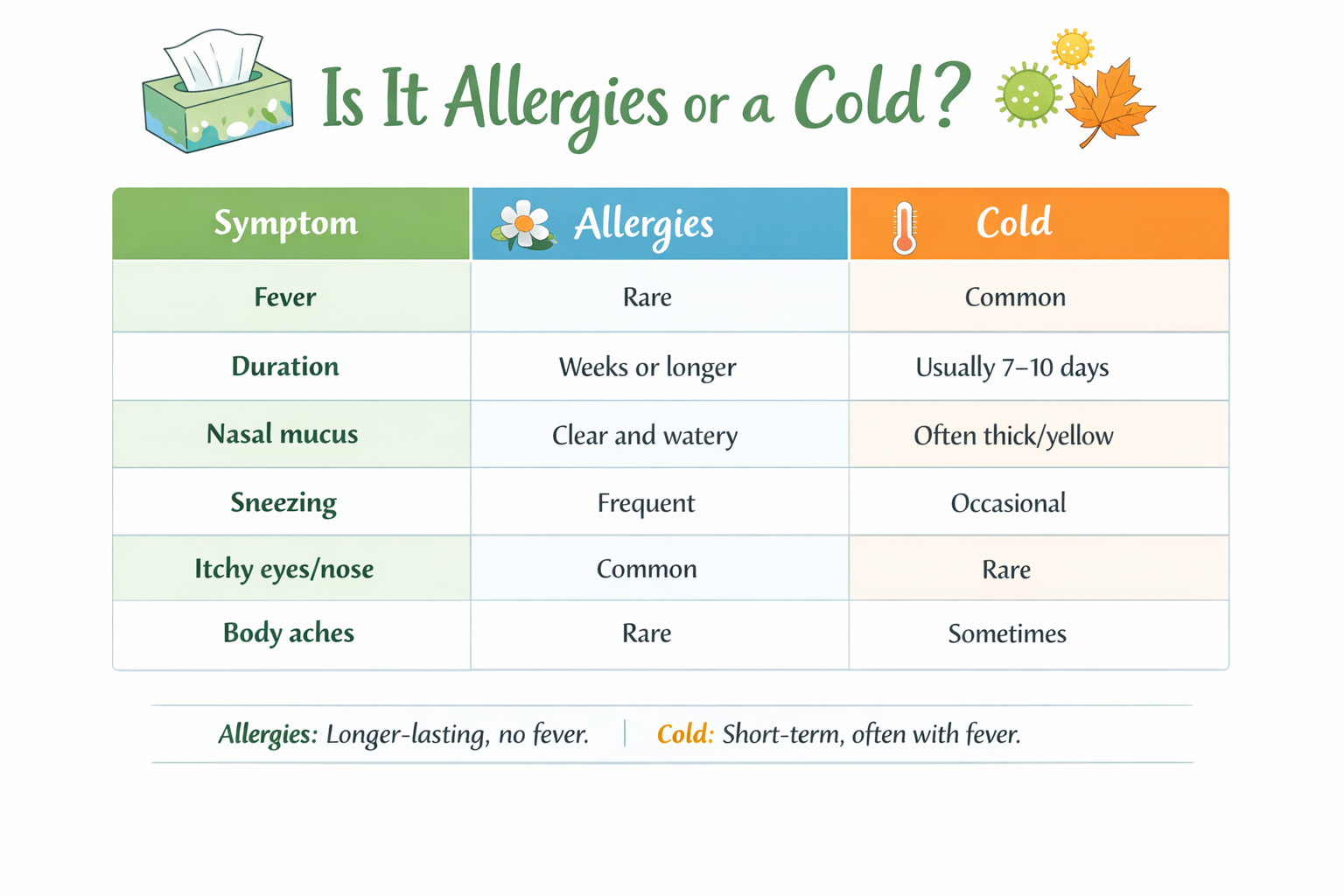
If symptoms persist for several weeks or occur during peak pollen season, allergies are often the likely cause.
Effective Treatment Options
If your child struggles with seasonal allergies, several treatments can help reduce symptoms and improve comfort.
Nasal Corticosteroid Sprays
(Examples: Flonase®, Nasacort®)
These sprays are often the most effective treatment for nasal allergy symptoms, helping reduce inflammation in the nose and sinuses.
Provide 24-hour relief when used consistently
May take several days to two weeks for full benefit
Generally recommended for children age 4 and older
Consistency is key—these medications work best when used daily during allergy season, not just when symptoms appear.
Oral Antihistamines
(Examples: Claritin®, Zyrtec®, Allegra®)
These medications help block the body’s allergic response and can reduce symptoms like sneezing, itching, and runny nose.
Usually taken once daily
Helpful for mild to moderate symptoms
Often used together with nasal sprays for better control
Always follow age-appropriate dosing instructions for children.

Simple At-Home Strategies That Help
Medication can be helpful, but a few simple daily habits can also reduce pollen exposure and make a big difference.
Wash hands and faces after outdoor play
This removes pollen that collects on the skin throughout the day.
Change clothes after school or outdoor activities
Pollen often sticks to clothing and can continue triggering symptoms indoors.
Shower before bedtime
This helps remove pollen from hair and skin so it doesn’t transfer to bedding overnight.
Keep windows closed during high pollen days
Using air conditioning and clean HVAC filters can help keep pollen levels lower inside the home.
Common Questions Parents Ask About Allergy Medications
Can my child take allergy medicine every day?
Yes. During allergy season, daily use of antihistamines or nasal steroid sprays is often recommended and considered safe when used according to age-appropriate dosing.
When should we start allergy medication?
Ideally, medications are started just before or early in allergy season and continued through the peak pollen months.
Will my child outgrow seasonal allergies?
Some children see improvement over time, while others continue to experience allergies into adulthood. The good news is that symptoms can usually be managed very effectively.
When to Talk With Your Pediatric Provider
If your child’s allergy symptoms are interfering with sleep, school, or daily activities, it’s worth discussing treatment options with your pediatric provider.
With the right approach—whether it’s medication, environmental adjustments, or both—most children can manage their allergies successfully and still enjoy the spring season.
If you have questions about seasonal allergies or need help creating a treatment plan for your child, House Calls for Kids is always here to help.
Wishing your family a healthy and happy spring.